

The industrial and logistics market in Worcestershire has long been a cornerstone for the mid-box sector, with units between 30,000 and 50,000 sq ft consistently in high demand. While this segment remains resilient, the market is increasingly grappling with a supply-demand imbalance: demand is outpacing supply, and the pipeline of new build stock is thinner than ever.
UK vacancy rates have edged up slightly, driven by the delivery of new developments and an increase in available second-hand space. However, in Worcestershire, Grade A mid-box space remains in short supply, with occupiers facing not just limited availability, but a lack of real choice.
To gain deeper insight into the challenges and opportunities in this market, we spoke with Associate Partner Lauren Allcoat-Hatton, based in our Worcester office, who has a deep insight into this evolving landscape.
A Cautious Approach to New Development
“Despite strong occupier appetite, developers are understandably cautious and with rising construction costs and economic uncertainty, speculative development is seen as risky. Many funders won’t commit to design-and-build schemes without a pre-let or pre-sale agreement in place.”
This cautious stance has led to a slowdown in new build activity, leaving occupiers with few modern options, especially those seeking energy-efficient and sustainable premises.
Limited choice, not just limited availability
“While there is some availability in the market, the real challenge lies in the lack of choice. Businesses today aren’t just seeking space—they’re seeking the right space. That means modern, efficient, and strategically located units that align with their operational needs and ESG commitments.
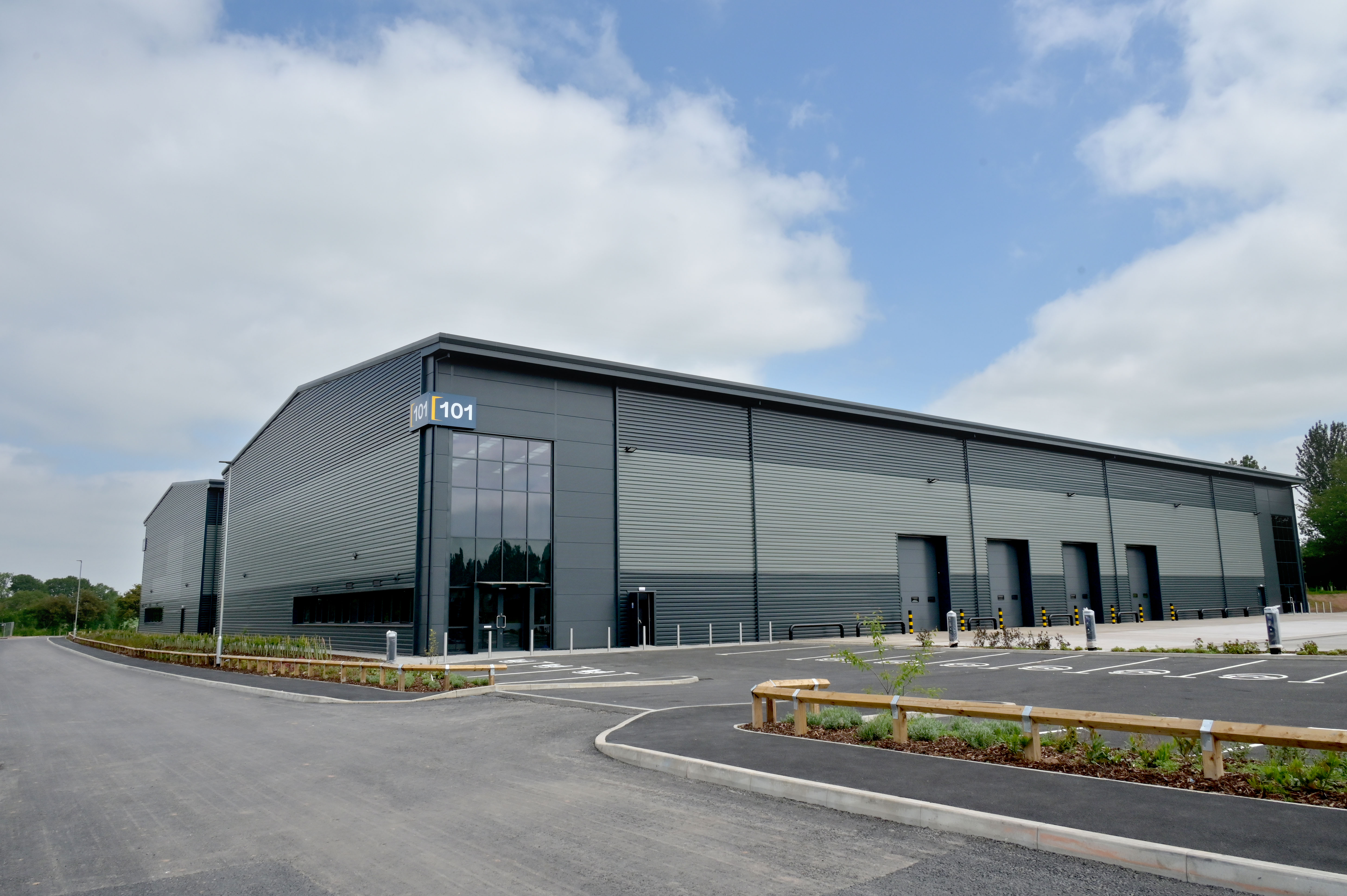
“This shortage of variety is especially problematic for companies aiming to relocate, consolidate, or upgrade their facilities. A prime example is Potter Space in Droitwich, where Units 103 and 104 on Kidderminster Road illustrate the kind of high-specification space in demand. These new build Grade A units, measuring 24,400 sq ft and 30,500 sq ft respectively, offer 10m eaves, EV chargers, a BREEAM ‘Very Good’ rating, and are situated within a gated estate with CCTV.
“Unit 103 has recently reached practical completion and is already attracting strong interest, while Unit 104, due for completion in August, is currently under offer. This level of activity underscores the appetite for quality space, and the limited options available to meet it.”
Occupier trends: Cost control and efficiency
“Occupiers are also adapting to rising operational costs and we’re seeing some businesses downsize to reduce overheads and improve energy efficiency. Increased national insurance contributions, utility bills, and minimum wage rates are all prompting a reassessment of space requirements.
"However, those looking to move are often surprised by the rental uplift in today’s market. For occupiers who’ve been in the same unit for several years, the jump in rent for a new, modern space can be significant. But with that cost comes greater control, particularly over energy usage and sustainability performance, which is increasingly important for businesses managing rising utility costs and ESG commitments.
Location still reigns supreme
"Location remains a top priority, proximity to motorway junctions and major road networks is still essential for logistics. But increasingly, occupiers are also seeking access to local amenities, recognising that employees don’t want to be based in the middle of nowhere. For sectors like IT, where staff have options in other markets, offering a well-located, energy-efficient workspace can be a major advantage in attracting and retaining talent.
“It’s important to remember that mid-box space is no longer just about logistics. It’s also about access to skilled labour and robust power infrastructure, both of which are vital for modern, tech-enabled operations. Control over energy use and sustainability performance is becoming a key differentiator, especially as businesses face rising utility costs and growing ESG expectations."
Market outlook: Steady activity, cautious optimism
The UK I&L market remained active in Q1 2025, with Grade A demand holding firm. While national vacancy rates have risen slightly, this is largely attributed to new completions and the return of second-hand stock. In Worcestershire, however, mid-box vacancy remains tight and rental growth is being sustained.
A clear illustration of this trend can be seen at Indurent Park, Norton Road, Broomhall, Worcester, WR5 2QR. Despite the unfortunate administration of previous tenants, we successfully re-let three modern second-hand units, originally built between 2021 and 2023, at significantly higher rents:
- Unit 1 (40,707 sq ft): Re-let in 2024 at a headline rent of £9.00 psf.
- Unit 2 (30,524 sq ft): Re-let in 2024 at £9.00 psf.
- Unit 4 (18,674 sq ft): Re-let in 2024 at £9.10 psf for the first 18 months, increasing to £9.25 psf thereafter.
In addition, two new build units, Unit 6 (31,885 sq ft) and Unit 7 (40,199 sq ft), reached practical completion at the end of 2024. Both are being marketed at £9.95 psf, with Unit 6 now under offer.
Landlords are understandably cautious. Empty units still incur costs - security, utilities, insurance and business rates after six months of vacancy. So even when demand is strong, the financials have to stack up.”
The Worcestershire mid-box market is resilient but constrained. Demand is there, but without a stronger pipeline of new build stock, occupiers will continue to face limited choice and rising costs. For developers and investors, the message is clear: opportunity exists, but it must be approached with strategic foresight and a clear understanding of occupier needs.
At Fisher German, we continue to work closely with landlords, developers, and occupiers to navigate these challenges and unlock value in a competitive market.