

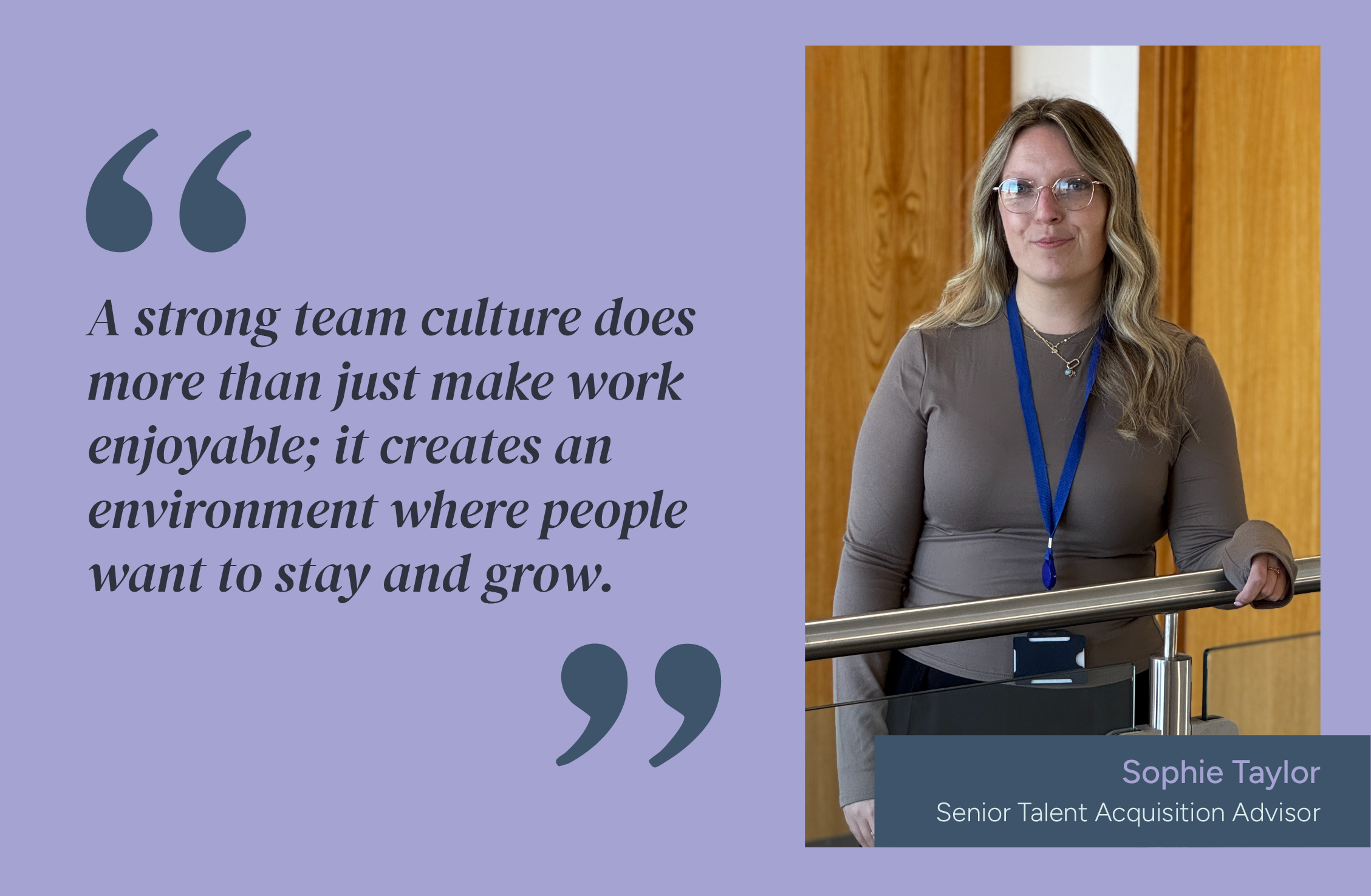
Recruitment and retention are strongly shaped by the location of an office, whether it’s situated in a vibrant city centre or in a small to medium-sized town like some of our own. When we spoke to Sophie Taylor, our Senior Talent Acquisition Advisor, she highlighted that while city centres have traditionally carried a sense of prestige, more organisations are now appreciating the distinct advantages offered by town centre locations and regional offices. Sophie explained that town centres foster a genuine sense of community, offer easier commutes, and provide convenient access to local amenities, features particularly valued by employees seeking an improved work-life balance. Offices based in towns tend to be more accessible, helping to reduce travel time and enhance wellbeing. Furthermore, being in a town can boost a company’s reputation as an employer that values its local connections and is dedicated to engaging with the community.
However, what truly sets a workplace apart, regardless of its location, is the sense of belonging it fosters. Team culture is the foundation of this sense of belonging, and it plays a pivotal role in supporting long and fulfilling careers. Employees who feel part of a team and who participate in social and collaborative events are more likely to feel engaged, valued, and motivated. Examples of activities that build this sense of community include charity challenges, volunteering days, team lunches, office parties, group walks, and friendly competitions. These activities help new joiners fit in and build relationships, making the office a place people genuinely want to be.
A strong team culture does more than just make work enjoyable; it creates an environment where people want to stay and grow. Research consistently shows that employees are more likely to remain with a company when they feel connected to their colleagues, supported by their managers, and aligned with the organisation’s values and mission. In such cultures, employees are encouraged to pursue internal opportunities, move between departments, and take on new challenges. This internal mobility is a key driver of long-term retention, as it allows individuals to shape meaningful and rewarding careers without needing to leave the company.
Team culture also supports career progression by fostering an environment of trust, open communication, and continuous learning. Employees who feel safe to share ideas, seek feedback, and learn from mistakes are more likely to develop new skills and take on greater responsibilities. Mentorship, coaching, and peer support are common in strong team cultures, helping individuals navigate career transitions and seize new opportunities. When employees see colleagues progressing and moving between departments, it reinforces the idea that long, varied careers are possible within the same organisation.
Moreover, a positive team culture enhances job satisfaction and loyalty. Employees who feel valued, recognised, and empowered to contribute are more likely to invest themselves in their work and stay with the company for the long term. This loyalty not only benefits the individual but also strengthens the organisation by retaining valuable knowledge, fostering innovation, and building strong client relationships.
The prestige of a location is not just about having a city address; it’s about creating spaces where people feel they belong, can collaborate, and enjoy being part of a team. Town centre offices, when combined with a strong team culture and clear career pathways, become powerful magnets for talent and help people build fulfilling, lasting careers. By investing in team culture, through social activities, open communication, and opportunities for growth, organisations can support long careers, encourage internal mobility, and ensure that employees thrive at every stage of their journey.