

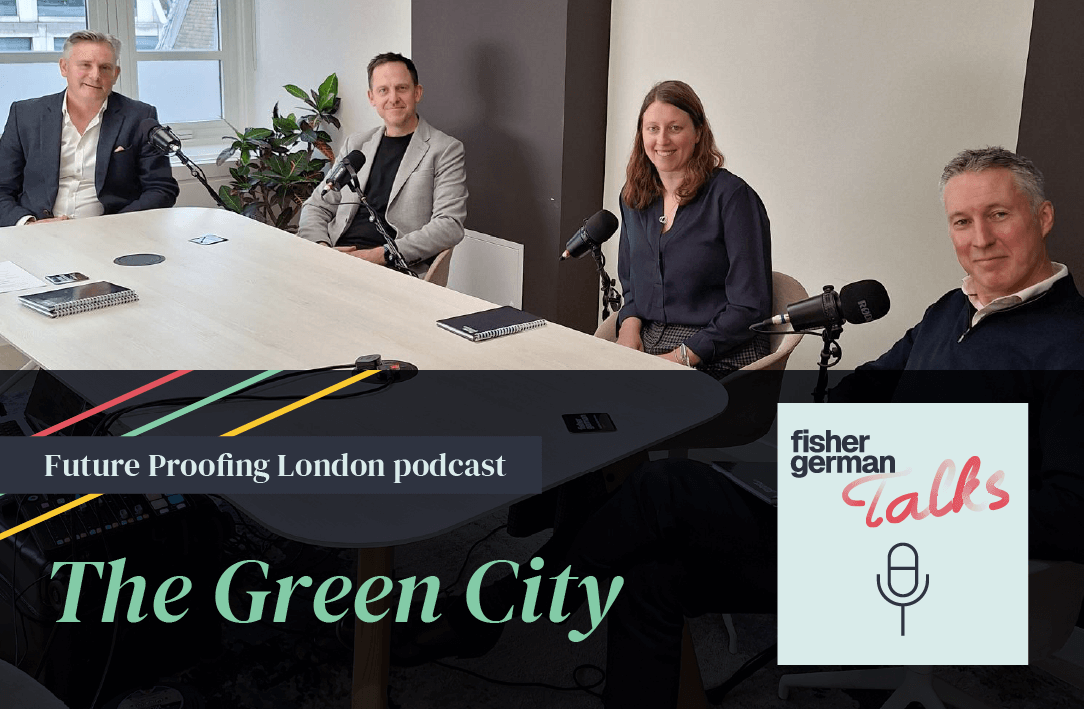
London’s built environment is at a crossroads, facing the urgent need to adapt and thrive in an era defined by sustainability challenges. To support our Future Proofing London thought leadership report, a new mini podcast series has been launched, gathering experts to discuss the challenges and opportunities shaping the capital’s real estate landscape.
The first episode, ‘The Green City,’ brings together partner Stuart Flint, ESG partner Rachel Bridge, Will Powell, a partner at Howells, and Jonathan Hulbert, Head of Programme Management at Better Buildings Partnership (BBP) to explore sustainability, retrofitting, and placemaking for London and the UK.
A startling fact sets the scene: around 80% of the buildings that will exist in the UK by 2050 are already standing today. This means that retrofitting, rather than new development, is central to delivering on climate targets. The panel delves into the practical complexities of upgrading existing stock, weighing up the costs, technical hurdles, and the disruption involved. Retrofitting often requires bespoke solutions, and there is no one-size-fits-all approach, especially when considering the diversity of London’s historic architecture.
A recurring theme is the delicate balance between preserving heritage and achieving modern efficiency. The guests highlight the importance of maintaining London’s unique character while improving energy performance. Retrofitting heritage buildings requires a thoughtful approach, it’s about respecting the past while equipping structures for a sustainable future and this conversation emphasises that innovation and sensitivity must go hand-in-hand, with successful projects demonstrating both aesthetic and environmental value.
Environmental regulation is a driving force behind much of the current change. The discussion covers the impact of Energy Performance Certificates (EPCs) and the Minimum Energy Efficiency Standard (MEES) regulations, which are raising the bar for landlords and investors. Compliance is not just about ticking boxes; it’s about future-proofing assets and safeguarding long-term value. As standards tighten, the real estate sector must remain agile and proactive.
The podcast draws international comparisons, particularly with Australia’s Neighbours Rating System, which has set a benchmark for transparency and performance in building sustainability. The group explores how lessons from overseas can inform UK practice, encouraging greater ambition and more robust data-driven approaches to measuring and improving building performance.
Evolving relationships between owners and occupiers are reshaping the way buildings are managed. Green leases and collaborative frameworks are becoming more common, aligning incentives for sustainability outcomes. The speakers note that successful retrofitting and ongoing management require open communication and shared purpose among all stakeholders, from investors to tenants.
Drawing on examples such as Howells’ London projects, as well as high-profile regeneration efforts at Canary Wharf and Kings Cross, which both illustrate the power of placemaking. These projects show how thoughtful design and community engagement can transform neighbourhoods, fostering a sense of belonging while delivering wider environmental and economic benefits.
Sustainability is not just a moral imperative; it also shapes financial returns. The discussion addresses how retrofitting and sustainability improvements can drive rental growth, increase asset value, and attract forward-thinking investors. However, the initial costs and uncertain payback periods remain key considerations, requiring robust business cases and clear communication with investors.
The importance of knowledge sharing, ongoing professional development, and the advisory role of industry leaders is a strong thread throughout the episode. The panel calls for a collaborative, open exchange of ideas and best practices, both within organisations and across the sector. Ongoing property management is highlighted as a crucial element in sustaining the gains from retrofitting projects.
Finally, the podcast explores the growing emphasis on biodiversity net gain. Integrating green spaces and nature-based solutions, both on-site and through off-site initiatives, offers opportunities to enhance wellbeing and resilience, alongside delivering environmental benefits. Guests stress that urban greening is not an afterthought, but a core part of future-proofing London’s buildings and communities.
‘The Green City’ episode sets the tone for a series dedicated to practical insight, real-world experience, and bold ideas. As London strives to meet its sustainability ambitions, collaboration, innovation, and a willingness to learn, both from the past and from international peers, will be vital.