

The UK’s ambition to deliver major infrastructure, housing and energy projects will only be realised if the minerals sector can continue supplying the raw materials that underpin development.
Yet while demand for aggregates and industrial minerals remains strong, operators are increasingly facing a more complicated planning environment, tighter land constraints and growing pressure to maximise the value of every permitted tonne.
Tom Giddings, Partner and Head of Geological Services, believes successful mineral development increasingly depends on combining technical understanding with realistic planning strategies from the earliest stages of a project.
For the minerals industry, the challenge is no longer simply identifying viable reserves. The greater challenge is securing consent, designing workable schemes and ensuring extraction strategies that make the most efficient use of available resources over the long-term.
I’ve worked in this sector for 25 years and mineral development has become significantly more complex over the last decade.
Operators are balancing commercial pressures alongside environmental obligations, community expectations and detailed planning requirements. That means schemes need to be robust, evidence-led and deliverable from the outset.
One of the biggest risks facing operators is the sterilisation of mineral resources.
Poor site design, inadequate assessment work or restrictive planning conditions can all limit the amount of recoverable material within a quarry, shortening operational life and reducing the long-term value of the asset.
Early-stage geological and planning assessments are therefore becoming increasingly important in helping operators understand not only what resource exists beneath the surface, but how it can realistically be extracted safely and efficiently.
In many cases, the focus should be on how extraction can be optimised within the permitted boundary. That could involve revisiting quarry phasing, reviewing slope stability assumptions, redesigning infrastructure layouts or reassessing how minerals are worked throughout the life of the site.
Maximising extraction is not simply about increasing output. Improving recovery rates, reducing waste material and ensuring that valuable reserves are not unnecessarily left behind due to operational or planning limitations are much more important.
At the same time, planning authorities are placing greater emphasis on restoration outcomes, environmental management and long-term land use. This is creating a more demanding consent process where operators must clearly demonstrate how proposals will be managed throughout the entire life cycle of a site.
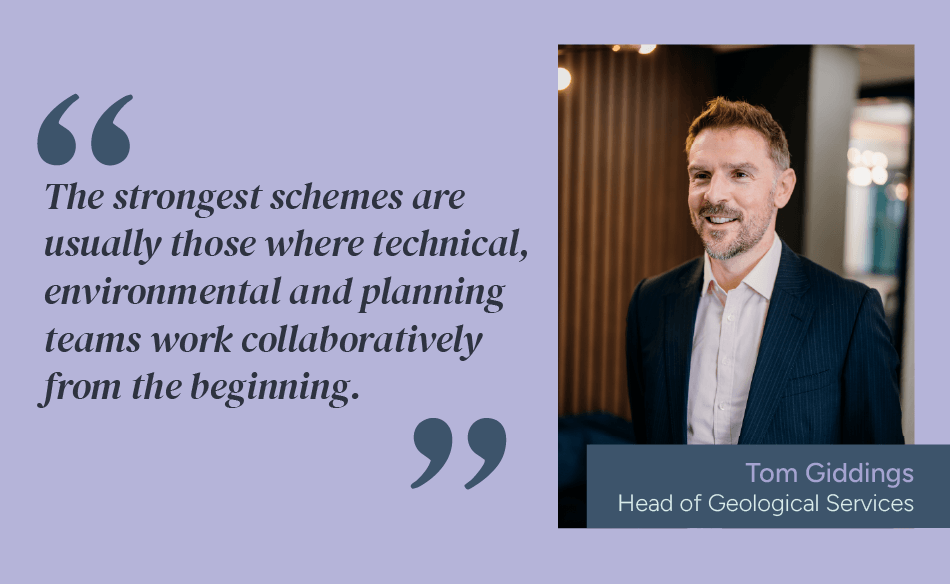
The strongest schemes are usually those where technical, environmental and planning teams work collaboratively from the beginning.
This was highlighted in the work we carried out at CEMEX’s flagship Dove Holes Quarry in Buxton – one of the largest quarries in Europe – where we undertook a major redesign at the site which allowed for the safe and efficient release of 5.5 million tonnes of limestone every year over the next 25 years of the quarry’s life.
Community engagement is also becoming increasingly important. Local stakeholders now expect greater transparency around traffic movements, restoration plans, environmental controls and operational timescales. Clear communication and credible supporting evidence can play a major role in building trust and reducing delays during the determination process.
With pressure on mineral supply continuing across many parts of the UK, the industry cannot afford inefficient recovery, delayed permissions or underperforming sites.
Delivering the next generation of mineral developments will require smarter planning, stronger technical evidence and a sharper focus on maximising the long-term value of permitted reserves.
For operators willing to adopt that approach, there remains significant opportunity to unlock value while supporting the UK’s wider growth ambitions responsibly and sustainably.