

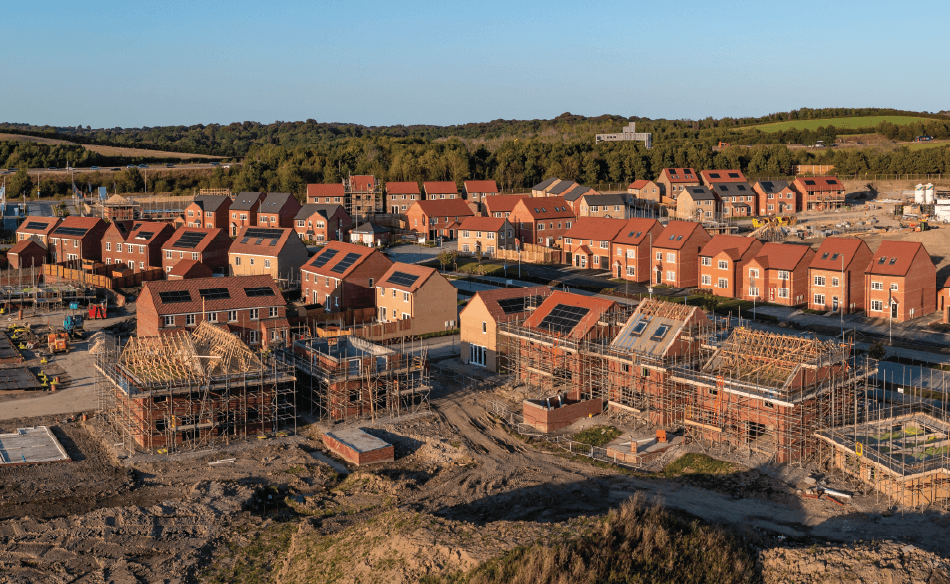
To gain deeper insight into the current market landscape and the evolving challenges and opportunities for landowners, developers, and rural businesses, we spoke with Arthur Morgan, Partner in our development agency team.
The latest figures show a worrying decline in housebuilding completions, following a 15-year low in planning consents. With lengthy delays between planning reform and delivery, viability pressures, and a sluggish new homes sales market, progress remains fragile. For landowners with a credible planning opportunity, the implication is clear: waiting for a ‘better’ moment can mean missing the current policy window and adding years to already extended timescales.
As anticipation builds around changes being implemented by the Labour government, stakeholders are watching closely for signals on growth and development. But for those able to progress, the priority should be readiness and momentum: strategic planning and timely action now can keep projects moving, allow landowners to capitalise on today’s opportunities, and ensure sites are positioned to respond quickly as policy and funding decisions land.
Central to these discussions is the government’s commitment to constructing 1.5 million homes, alongside promises to streamline the planning system and boost investment in infrastructure. However, with delivery still lagging and reforms evolving, landowners, developers, and rural enterprises face a narrowing window in which to secure consents under the current approach. Those who can progress should do so now, rather than banking on future clarity.
The planning application process for large residential developments remains lengthy and complex. Government data shows only around 23% of major applications are decided within the statutory 13-week period. Slower local decision‑making, together with a rising number of appeals for non‑determination and refusals, has further lengthened timescales as appeals submitted to the Secretary of State face their own backlog.
Timing is therefore critical, especially for schemes on greenbelt or rural land. Seasonal ecological surveys and other validation requirements can also restrict when applications can be submitted. Recent amendments to national planning policy have created opportunities for many landowners, but there is no guarantee those changes will remain beyond the current parliamentary term. Landowners who may need to appeal should act now: from initial preparation to a potential inspector-led decision can take a very long time, so to benefit from the current policy regime applicants should aim to submit by early 2027.
Alongside planning, tax and wider asset-management decisions remain important considerations that can influence timing and structure. With Capital Gains Tax (CGT) announcements in 2024 and no new measures in the November 2025 budget, many landowners and rural businesses still remain cautious, weighing the risks of action versus inaction. The key point, however, is that tax planning works best when it supports a clear delivery strategy, so it should run in parallel with, not instead of, progressing the planning opportunity.
Now is the moment for landowners and rural enterprises to look beyond the immediate horizon and make sure they are ‘planning-ready’. The current climate provides an opportunity to review asset portfolios, evaluate succession plans, and put the right professional team in place so that opportunities can be converted into applications at pace. Whether it’s releasing land for housing, restructuring business models, or planning generational transfer, proactive decisions now create optionality, while delay can reduce it.
Equally, those considering green belt or rural planning applications must recognise that the landscape for such proposals may shift rapidly. With current policies under review and the possibility of a move towards revised grey belt or urban extension strategies, the window to secure permission for green belt development could be fleeting. Submitting applications now, before further reforms take effect, ensures the best chance of success and provides valuable time for asset management and succession planning.
Ultimately, the time for hesitation is over. Landowners, developers, and rural businesses with a planning opportunity should act now to secure momentum and protect value, while running tax and succession planning alongside the process to support the best overall outcome. Waiting for political clarity may feel prudent, but in practice, those who progress early will be best placed to achieve enhanced values amidst whatever changes the future brings.