

If you work in the property sector, you will be cognisant of the fact that the built environment is responsible for almost 40% of the nation’s CO2 emissions and 33% of its water consumption*. Approximately 80% of the buildings, which will be in use in 2050, have already been built.
The built environment and sustainability are inextricably linked, and sustainability has become embedded in our culture. A range of policies and strategies have helped ensure this link is acknowledged and addressed. For example, requirements to deliver Biodiversity Net Gain (BNG) in developments has promoted development practices that leave natural habitats in a measurably better state than before, encouraging more sustainable land use and conservation efforts.
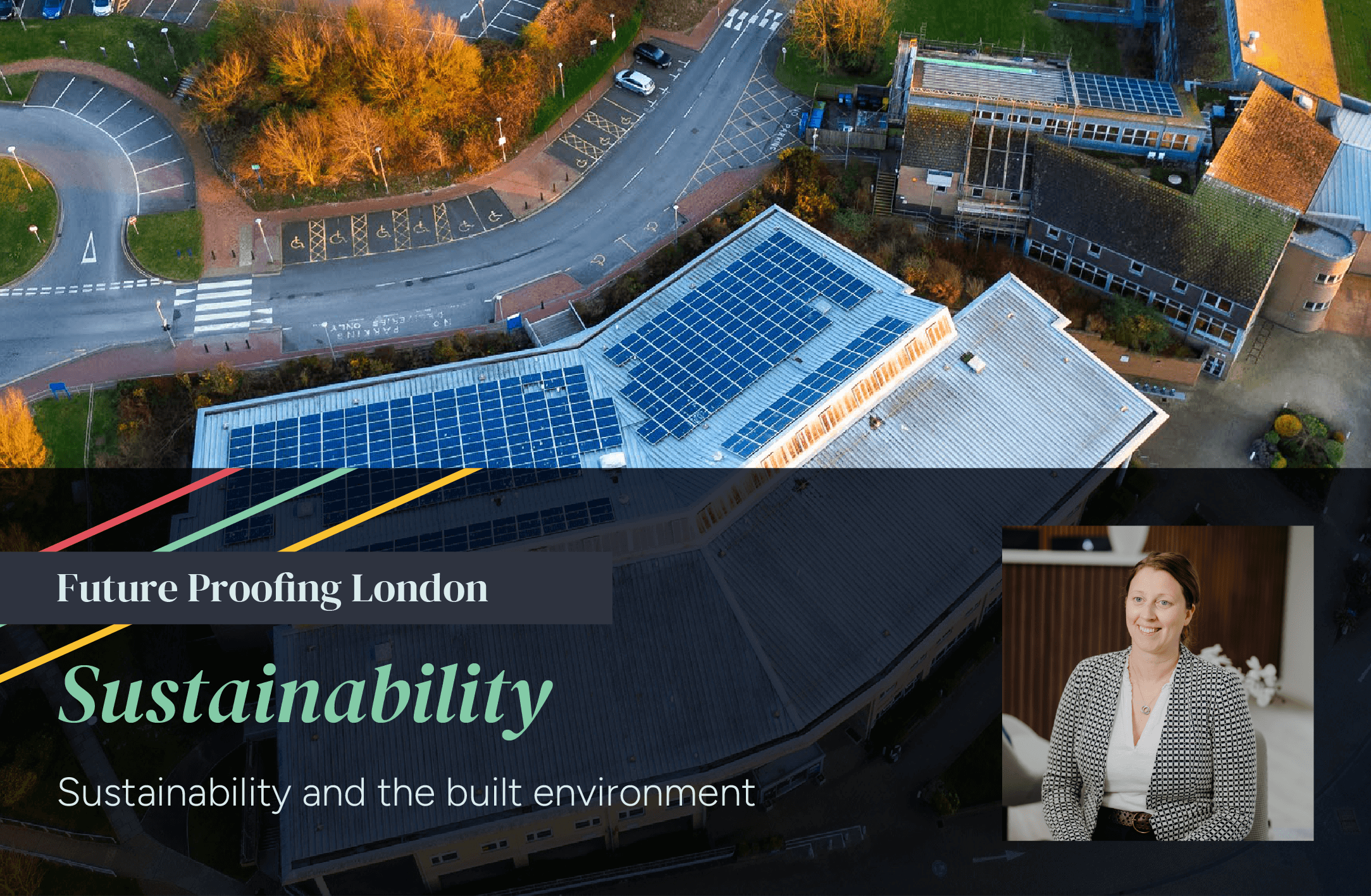
There have been moves towards retrofitting existing buildings rather than demolishing and rebuilding. This enables new buildings to be preserved while improving their sustainability credentials by adopting energy saving and carbon emission reduction strategies. Examples include installing renewable energy sources, such as solar panels and heat pumps in Heating, Ventilation and Air Conditioning (HVAC) systems to reduce reliance on fossil fuels. Where retrofitting is not possible and building must be rebuilt, across the sector there is an increase in the reuse and recycling of materials from demolished buildings.
Other innovations include the implementation of smart building management technology to minimise operational emissions generated by heating, cooling and lighting systems. Energy Performance Certificates (EPCs) and Display Energy Certificates (DECs) are a measure of the Energy Efficiency Standard of the building. Consultations have also been launched to gather industry feedback on how best to implement more ambitious targets. While the government has not yet legislated for further changes, ministers have signalled an intention to raise minimum EPC requirements, reflecting both climate objectives and the growing importance of sustainability in the built environment.
companies are also pursuing opportunities to offset their carbon emissions and explore the use of green leases to put sustainability at the forefront of their building considerations.
A more holistic approach to sustainability in the property sector now centres on ESG (Environmental, Social, and Governance) baselining and data-driven impact assessment. ESG baselining involves systematically measuring and benchmarking a property’s performance across environmental, social, and governance criteria. This process not only supports regulatory compliance but also provides investors, landlords, and tenants with transparent data to inform strategic decisions. As ESG data collection and benchmarking mature, the property sector is moving toward greater transparency, consistency, and accuracy . This shift not only aligns with evolving regulatory expectations but also enhances long-term asset value and resilience in a rapidly changing market.
Beyond buildings, cities like London face major environmental challenges, including climate change, pollution, and biodiversity loss. This is largely due to a lack of green infrastructure, which plays a vital role in cooling urban areas, managing excess rainwater, supporting biodiversity, and improving public health. This is where the ‘Environment’ connects with the ‘Social’ in ESG: positive environmental action leads to meaningful social benefits, underscoring the need to integrate all three ESG pillars into business strategies.
Sustainability is an integral part of owning, occupying, and managing a property. It is not a ‘green washing’ exercise, designed to pay lip service to saving the planet. It is an important part of the property sector’s commercial culture, as well as a creating valuable return on investment.
Find out more about our green energy and sustainability consultancy and our delivering net zero service.
Read the full report - "The Working City," and our new London office brochure.
Visit our London landing page.