Biodiversity Net Gain (BNG)
Since early 2024, Biodiversity Net Gain (BNG) has been a mandatory requirement for most developments, and by 2025 it became fully embedded in rural planning practices. Farmers and landowners are now central to delivering habitat improvements.
In 2025, DEFRA ran two major consultations: to enhance BNG for minor and brownfield developments, and to extend BNG to Nationally Significant Infrastructure Projects (NSIPs) from 2026. Both sought to rebalance obligations by easing requirements on smaller schemes while capturing the largest. In December 2025, the Government announced a forthcoming BNG exemption for small sites up to 0.2ha; until it takes effect, the April 2024 small-sites rules remain in force.
From a financial perspective, BNG can create additional revenue for rural businesses, particularly where opportunities are well sited, as developers may pay significant sums for off-site biodiversity units. Realising this potential entails long term (typically 30 years) management commitments, upfront investment in habitat creation, ongoing monitoring, and potential future land-use constraints.
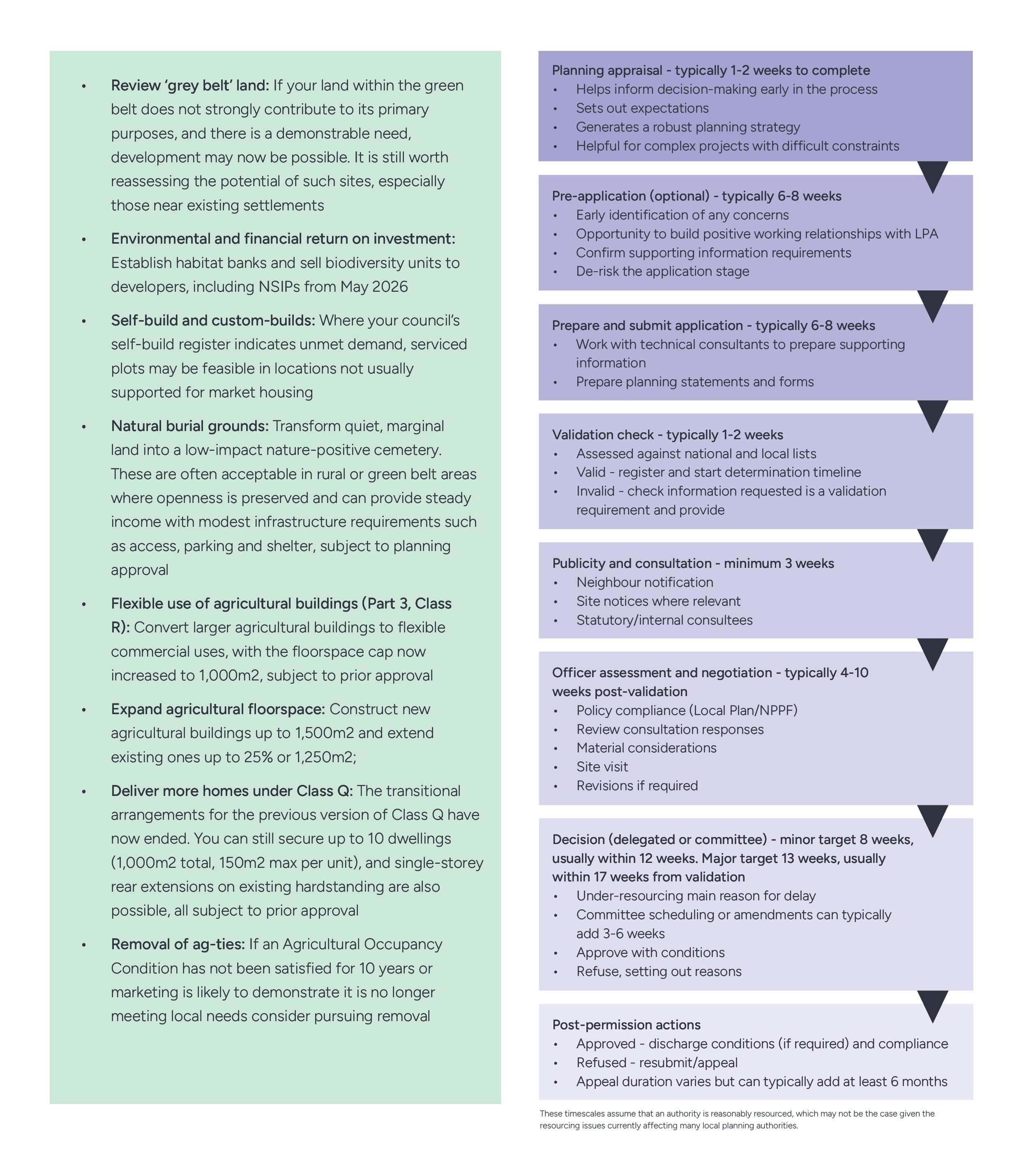
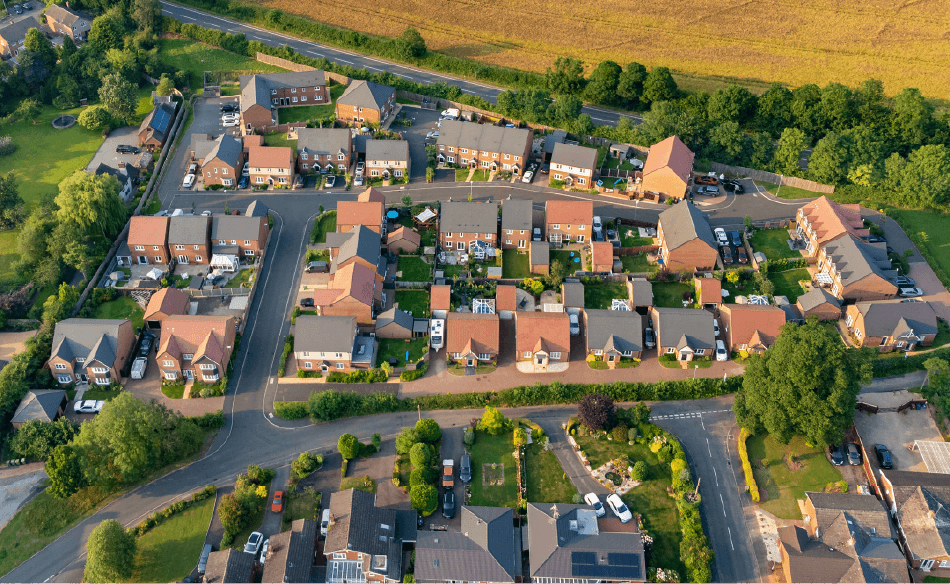
Housing delivery Housing delivery has become a central focus, fuelled by significant planning reforms, which has prompted most local authorities to increase their annual housing targets, in addition to the recently published draft National Planning Policy Framework (NPPF), aimed at changing the way housing delivery is managed. Consequently, there are now even greater opportunities for residential development. If you have not previously explored the development potential of sites near existing settlements, or if past attempts have been unsuccessful, now is an ideal time to reassess these sites in light of emerging policy changes. Furthermore, opportunities to secure self-build or custom-build plots may arise in locations where market residential development is not usually supported, particularly if the Council is not meeting its statutory duty.
Grey belt
The concept of ‘grey belt’ emerged as one of the most prominent planning topics in 2025. Introduced through the government’s broader planning reforms, the grey belt refers to areas within the green belt that are considered to have lower value and may be suitable for development under specific conditions.
The intention is to strike a balance between the need for housing and economic growth alongside preserving the most valuable green belt land.
Land within the green belt that is grey belt may now be appropriate for various types of development previously not achievable, where there is a demonstrable need for it, potentially leading to a significant increase in its value.
Opportunities