

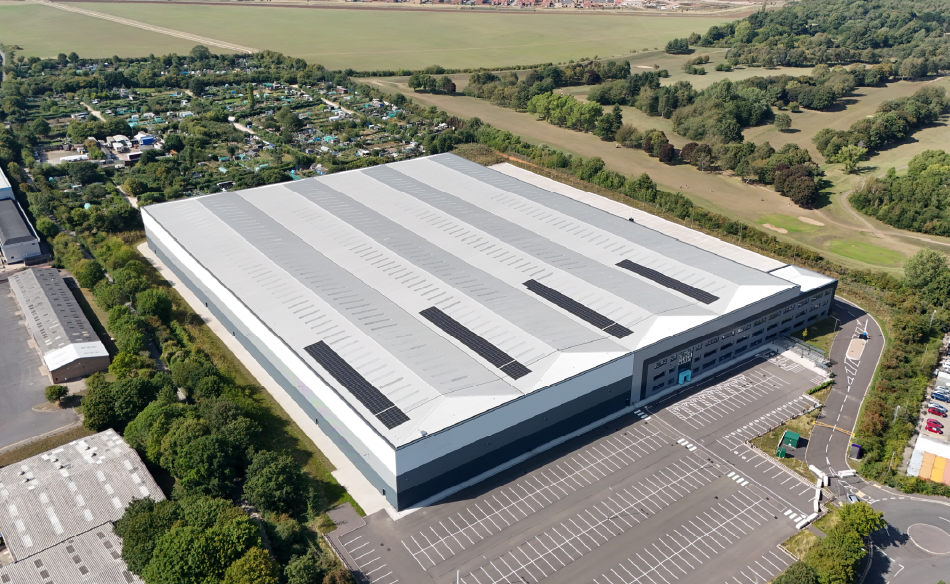
Prime Minister Andy Burnham’s early positioning on housing, devolution and public-sector delivery has put development firmly back at the centre of the national political debate. While housing has attracted much of the attention, the same agenda has significant implications for employment land.
Framed around “Manchesterism”, radical devolution and “good growth”, Burnham’s direction of travel points to a more joined-up approach to the economy, society and place than a purely numbers-led model. For landowners, developers, investors, occupiers and local authorities, it raises a critical question: where will the land come from to support the jobs, investment and infrastructure needed alongside new homes?
For the development sector, this matters because good growth cannot be delivered through housing alone. If the aim is to create resilient, well-functioning places rather than commuter settlements, employment land must be planned as part of a wider strategy for places, people and infrastructure.
A political agenda built around reindustrialisation, domestic supply chains and regional growth will require space for industrial, logistics, advanced manufacturing, energy, data and supporting commercial uses. Without that capacity, growth ambitions risk being constrained before they can be realised.
Associate Partner and Head of Strategic Land for Employment, Matt Sladen, who works in our development agency team, said: “Burnham appears to be setting the direction of travel and letting others fill in the gaps. The headline ambition is clear, but the detail will be crucial. If ‘good growth in every postcode’ is to mean more than a political phrase, policy will need to support deliverable sites, viable development and genuine collaboration between the public and private sectors.”
The next test will be how those commitments translate into policy. The revised National Planning Policy Framework (NPPF), now expected after the summer, will provide the first major signal on grey belt, housing targets and delivery mechanisms. The Autumn Budget will then indicate whether the Treasury is prepared to support the agenda, and what that means for property taxation, infrastructure investment and development viability.
For employment land, the central issue is whether the planning system gives sufficient weight to long-term economic need. Demand for well-located industrial and logistics land remains strong, while occupier requirements continue to evolve as sectors such as advanced manufacturing, defence technology, energy infrastructure and data centres expand.
These uses require land that is suitable, serviced and deliverable. They often also need strong transport connections, power capacity, access to labour and the ability to accommodate larger footprints. If the policy debate remains focused too narrowly on housing numbers, there is a risk that employment land supply will fall short of what the economy needs.
At Fisher German, strategic land projects for industrial, logistics and other employment uses are being progressed at various stages of the promotion and planning process, with the potential to deliver more than 36 million sq ft of development. That pipeline represents more than future buildings; it represents jobs, investment and economic activity across the UK.
Employment land should therefore be viewed as a core part of the good growth agenda, not as a separate commercial property issue. Well-planned sites can translate policy ambition into local jobs, inward investment and stronger supply chains.
That point becomes even more important if greater influence moves towards regional and mayoral institutions. A clearer strategic planning framework could help coordinate growth across wider geographies, but only if regional priorities are backed by deliverable land, realistic evidence and funding certainty.
For landowners, this could open up new opportunities. Sites that have historically been considered only for agricultural or residential use may have long-term commercial or industrial potential, particularly where they are close to major roads, growth corridors, energy infrastructure or established employment clusters.
The process, however, is rarely straightforward. Strategic land promotion for employment uses requires early appraisal, technical evidence, planning strategy, stakeholder engagement and a clear understanding of market demand. It also requires careful consideration of legal structures, promotion or option agreements, infrastructure costs and the route to disposal or development.
Matt added: “The test for regulated sectors and major development may shift from compliance alone to demonstrable public benefit. That does not need to be a negative for landowners or developers, but it does mean sites will need to be positioned carefully and backed by strong evidence on need, viability, infrastructure and economic impact.”
That evidence will be especially important for employment land. Proposals will need to show how development supports market demand, local employment, skills, sustainability and wider economic resilience. In an increasingly interventionist policy environment, the strongest sites will be those that can demonstrate clear public benefit as well as commercial viability.
Timing will also be critical. Waiting until land shortages become acute risks slowing economic growth and making it harder for occupiers to find suitable sites. Forward-thinking promotion can create a healthier development pipeline, provide greater certainty for occupiers and ensure landowners are properly rewarded for the opportunities available.
The opportunity is significant, but it will require more than political ambition. It will need a planning system that recognises employment land as essential economic infrastructure, and a development sector able to evidence why the right sites matter. For landowners and promoters, the message is clear: employment land has a central role to play in the next phase of regional growth, but it must be identified, promoted and positioned early.