

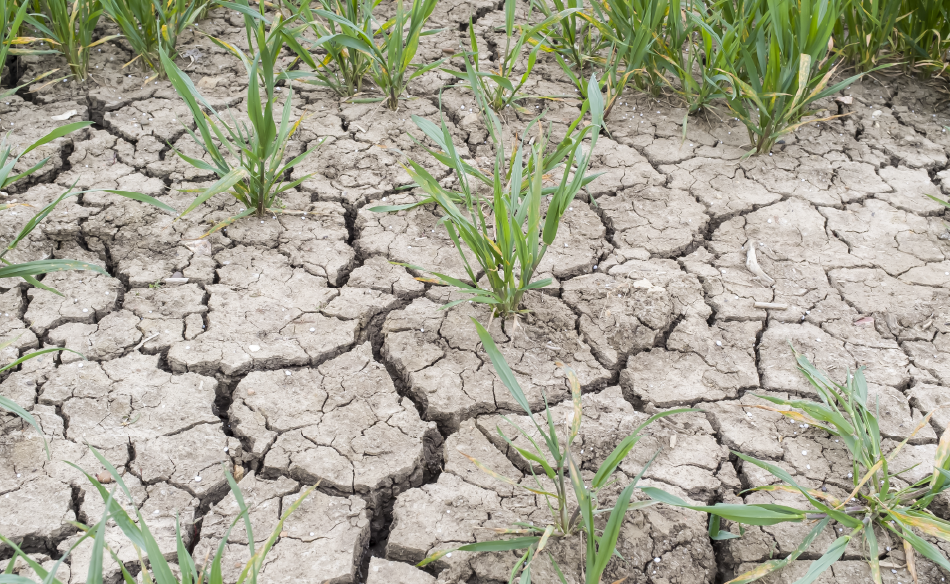
Recent warnings about drought and possible food shortages should concern every UK household. For farmers, though, these are not abstract headlines; they reflect the everyday challenge of producing food in conditions that are increasingly volatile, costly and difficult to predict.
After a winter of saturated ground and delayed drilling, this summer’s dry weather has brought the opposite challenge: parched soils, restricted irrigation, weaker grass growth and pressure on feed reserves. This shift from too wet to too dry is now one of the defining challenges facing UK agriculture.
We caught up with David Kinnersley, Head of Agribusiness, to explore what drought means for UK food security. Drought is more than a production challenge; it is a food security risk. Stressed crops produce lower yields, slower grass growth forces livestock farmers to draw on winter forage sooner, and water abstraction limits leave growers of vegetables, fruit and high-value crops with fewer options just when demand for water is greatest.
The UK has long depended on farmers’ resilience, but that resilience has limits. If extreme weather becomes more common, we cannot assume markets will absorb every shock or that imports will always make up the shortfall, especially when many supplier countries face climate pressures of their own. This makes domestic production, and the businesses behind it, strategically important.
The drought comes at a time when many farm businesses are already managing high input costs, labour shortages, policy transition, market volatility and the need to invest in environmental delivery. For some, the immediate concern is cashflow. For others, it is whether the business case still stacks up for next season’s cropping or long-term capital investment.
There is also an emotional cost. Farming is a long-term industry built on stewardship, family commitment and confidence in the future. Repeated weather shocks can erode that confidence, particularly when farmers feel they are being asked to produce more, protect nature, reduce emissions and absorb greater risk at the same time.
If drought is becoming a recurring feature of British farming, water planning must move from short-term crisis response to long-term infrastructure. On-farm reservoirs, rainwater capture, improved irrigation systems and more flexible approaches to water abstraction all have a part to play. But these require planning permission, capital, confidence and policy alignment.
Farmers should not be left to shoulder this transition alone. Investment in water resilience delivers benefits beyond individual holdings: it supports food production, protects rural economies, improves environmental management and strengthens the UK’s ability to withstand supply shocks.
So how can we support farmers moving forward?
Support needs to be practical, timely and tailored to the realities of farm businesses. That means helping farmers assess risk, plan investment and build resilience without losing sight of day-to-day pressures.
- Plan for volatility: Businesses need robust scenario planning that accounts for wetter winters, drier summers, yield variability and rising costs.
- Support investment: Farmers need access to finance and advice for water storage, efficient irrigation, soil health, infrastructure and technology that improves resilience. Soil health measures are already showing yield resilience results
- Protect cashflow: Drought can create immediate working capital pressure, especially where yields fall or feed costs rise. Early conversations with advisers and lenders can help businesses preserve flexibility.
- Back collaboration: Water management, supply chain planning and local resilience will increasingly require farmers, water companies, policymakers and buyers to work together.
- Recognise food production as strategic: The UK needs a policy environment that values productive, profitable farming as central to national resilience.
The current drought is a warning sign. It shows how quickly weather extremes can move from environmental concern to business risk, supply chain risk and national resilience risk. Farmers are already adapting, but they need the right support around them to make that adaptation sustainable.
Our role is to stand alongside farmers with practical advice, long-term thinking and a clear understanding of the pressures they face using the experience we have across many businesses. The question is no longer whether UK farming must prepare for more volatile weather. It is whether we are prepared to give farm businesses the tools, confidence and investment they need to keep feeding the country in a changing climate.