

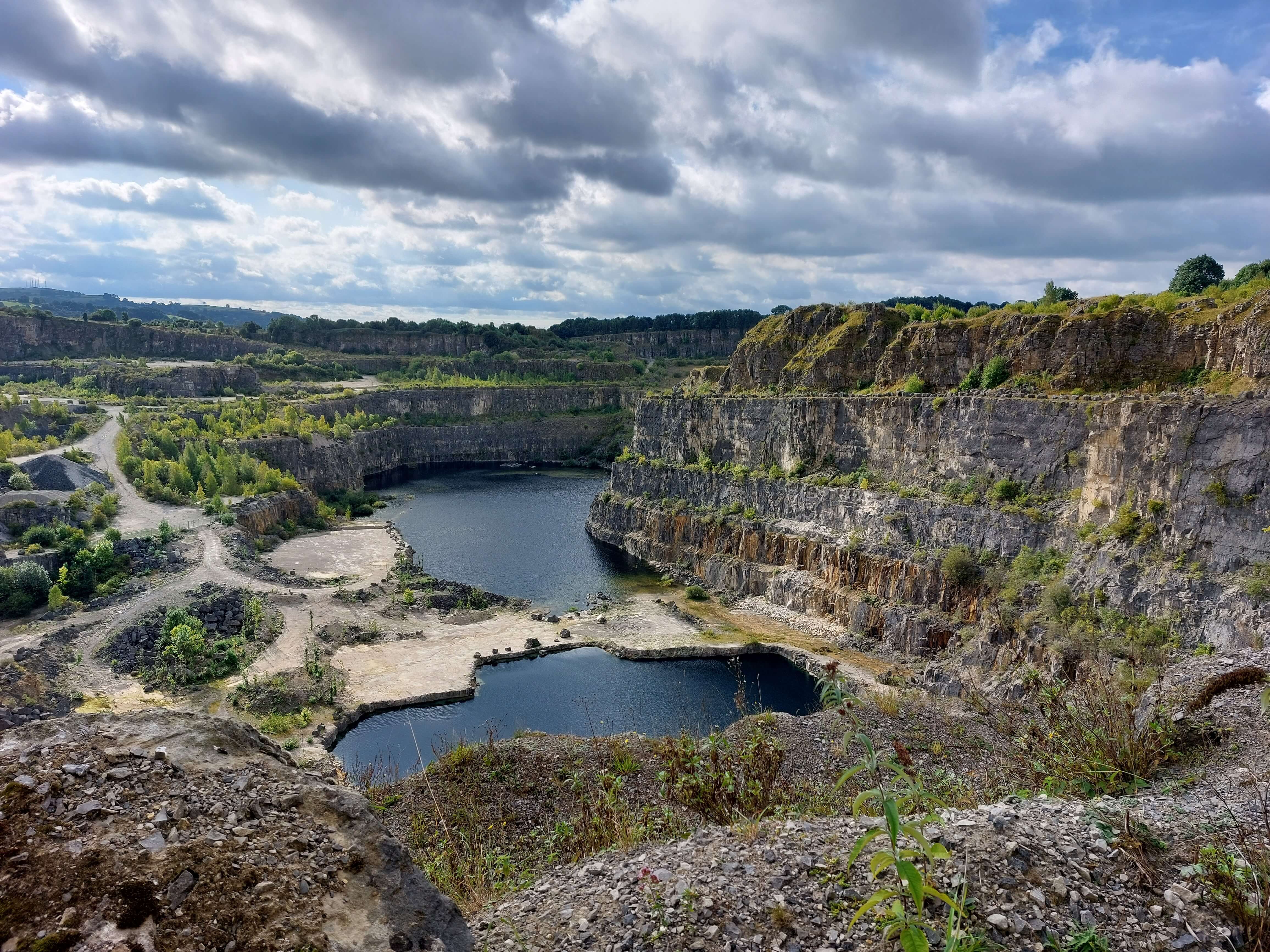
The UK relies on a steady supply of aggregates and minerals for construction, infrastructure, and energy needs. Discussions about mineral development are often simplified, but as Tom Giddings, Partner and Head of Geological Services in minerals team explains, responsible development involves evidence-based decisions, thoughtful design, and long-term stewardship from the outset.
Recent industry briefings have highlighted tightening permitted reserves, ongoing supply pressures and uneven demand across key products. At the same time, the sector is being asked to do more: reduce carbon, increase resource efficiency, improve biodiversity outcomes and demonstrate social value. None of those expectations are unreasonable. But they do mean that decisions, by landowners, operators, planners and investors, need to be made with greater confidence and clarity than ever before.
Geology is sometimes treated as the technical appendix to a commercial decision when it should be the starting point. Robust geological modelling, reserve appraisal and site investigation derisk projects, improve design outcomes and help align development with environmental constraints. They also provide the transparency stakeholders increasingly expect, what is present, what can realistically be worked, and what the impacts and mitigations look like.
When permitted reserves are under pressure, the cost of getting the geology wrong rises sharply: sterilised resource, inefficient extraction, avoidable consenting delays, or restoration strategies that don’t stand up to scrutiny. Conversely, when the geology is well understood, options multiply, phasing can be optimised, materials can be used more efficiently, and restoration can be planned in a way that leaves a genuine legacy.
Decarbonisation and circularity are changing what “good” looks like in mineral development. Recycled aggregates and secondary materials are a growing part of the picture, but they don’t remove the need for primary supply, particularly for certain specifications and regional demand patterns. The challenge is to integrate primary extraction, recycled materials, soil reuse and after use planning into a joined up, whole life approach.
That requires practical decisions: how materials are managed on site, how soils are handled and reused, how restoration is phased, and how outcomes are monitored. Sustainability becomes real when it is engineered into the scheme from day one, not retrofitted at the end of a planning process.
Planning is often portrayed as an obstacle. In my experience, the best outcomes come when planning is treated as a framework for getting the right development in the right place, with the right safeguards. That means early engagement, clear evidence, and proposals that are designed to be deliverable, commercially and environmentally.
It also means recognising that minerals are a land use, not just an industrial activity. Landowners need long-term strategies for mineral estates. Operators need secure tenure and workable designs. Communities need clarity on impacts, timescales and benefits. Planners need confidence that what is proposed can be controlled and restored. Those interests won’t always align perfectly, but they can be reconciled through credible information and straightforward agreements.
Our minerals team supports landowners, operators and stakeholders to unlock the value of mineral assets responsibly and sustainably. Our work typically includes:
- Mineral reserve assessments, geological modelling and feasibility studies
- Land searches, ground investigations and site due diligence
- Quarry design, development planning and operational support
- Negotiation of mineral options, leases and disposals
- Rent and royalty reviews, mineral estate management and compliance monitoring
- Valuations for strategic planning, transactions and bank security
- Materials management, sustainable soil reuse and after use planning
- Restoration strategy and long-term land use advice
- Planning support, promotion and stakeholder engagement
- Compulsory purchase, mineral compensation and sterilisation claims
With more than two decades in the quarrying and minerals sector, including managing a substantial mineral reserve portfolio across Europe before joining Fisher German in 2021, one thing has remained consistent: the projects that succeed are the ones grounded in evidence, built on good relationships, and planned for the long term.
If the UK is serious about growth, resilience and the transition to a lower carbon economy, then we need to be equally serious about minerals, and about making better decisions with the best available geological understanding. That’s the conversation worth having.
Our minerals team is a testament to the power of diverse backgrounds and flexible career paths within the sector. Unlike many professions, there is no formal minerals degree, which means our team draws talent from a wide range of disciplines, including geology, engineering, planning, and estate management. This blend of experience enriches our approach to mineral development, ensuring that our advice is both practical and innovative.
The journey originally began in 2013, marking the start of a focused commitment to mineral asset management. A significant milestone was the arrival of Partner and Head of Minerals, William Gagie, whose extensive quarrying career brought invaluable operational insight and helped establish a specialist minerals team. In 2021, I joined bringing my own background as a geology manager with a major quarry operator. With two career paths that had developed in parallel, it felt like the right moment for Fisher German to formalise what was already taking shape. As a result, the minerals team was officially created, specialising exclusively in mineral assets, mineral development, and strategic advisory work. This foundation enabled us to support clients through evolving industry challenges and set the stage for future growth.
The formal establishment of the minerals team in 2021 marked a pivotal moment for Fisher German, coinciding with my own journey joining the firm and bringing geological leadership into sharper focus. This step didn't simply add another string to our bow; it underscored our intent to build a team with truly specialist capability and a broader outlook. Welcoming talented individuals such as Ross Smith, Matthew Pocock and Maisy Moseley, alongside enthusiastic graduates, has shown just how accessible and varied the route into minerals can be. At Fisher German, we champion experience from across property, environmental and engineering disciplines, recognising that it is this diversity which enables us to offer advice that is both robust and forward-thinking.
Whether supporting landowners, operators or industry stakeholders, we are committed to unlocking mineral asset value in ways that are both responsible and sustainable. The team’s continued expansion is a reflection of our dedication to professional growth, collaboration and adapting to the needs of a sector undergoing rapid transformation. As we look ahead, our focus remains on nurturing new talent and deepening our expertise, for our clients, for the industry, and for the future of minerals in the UK.